
The Warehouse Lease Mistake That Can Cost Hundreds of Thousands
Attention Real estate Brokers, Warehouse Tenants and landlords
When negotiating a new warehouse lease, most attention goes to rental rates, square footage, tenant improvement allowances, and free rent periods. However, one of the most expensive and disruptive issues is often overlooked until after the lease is signed: pallet racking permits and building compliance requirements. For warehouse tenants, landlords, and commercial real estate brokers, failing to address these issues early can lead to major project delays, operational disruptions, and unexpected costs that can easily reach hundreds of thousands of dollars.
The Hidden Problem Behind “Rack Ready” Warehouses
Many industrial buildings are marketed as “rack ready,” but that does not necessarily mean they are prepared for the tenant’s actual racking layout from a permitting, fire protection, or life safety standpoint.
A common scenario looks like this:
- The tenant signs the lease quickly.
- The racking layout is developed later.
- During permitting, the city or fire marshal requires upgrades to sprinklers, lighting, fire alarms, egress paths, or structural systems.
- The tenant is then left responsible for costly upgrades, permit delays, and contractor coordination.
Meanwhile, free rent periods continue running while permits, inspections, redesigns, and construction delays prevent the tenant from becoming operational.
In many cases, tenants are forced to absorb costs that should have been identified and negotiated upfront with the landlord during the lease process.
Why Rack Permits Matter More Than Ever
Municipalities and fire departments are enforcing rack permitting requirements far more aggressively than in the past, especially for high-density warehouse storage operations.
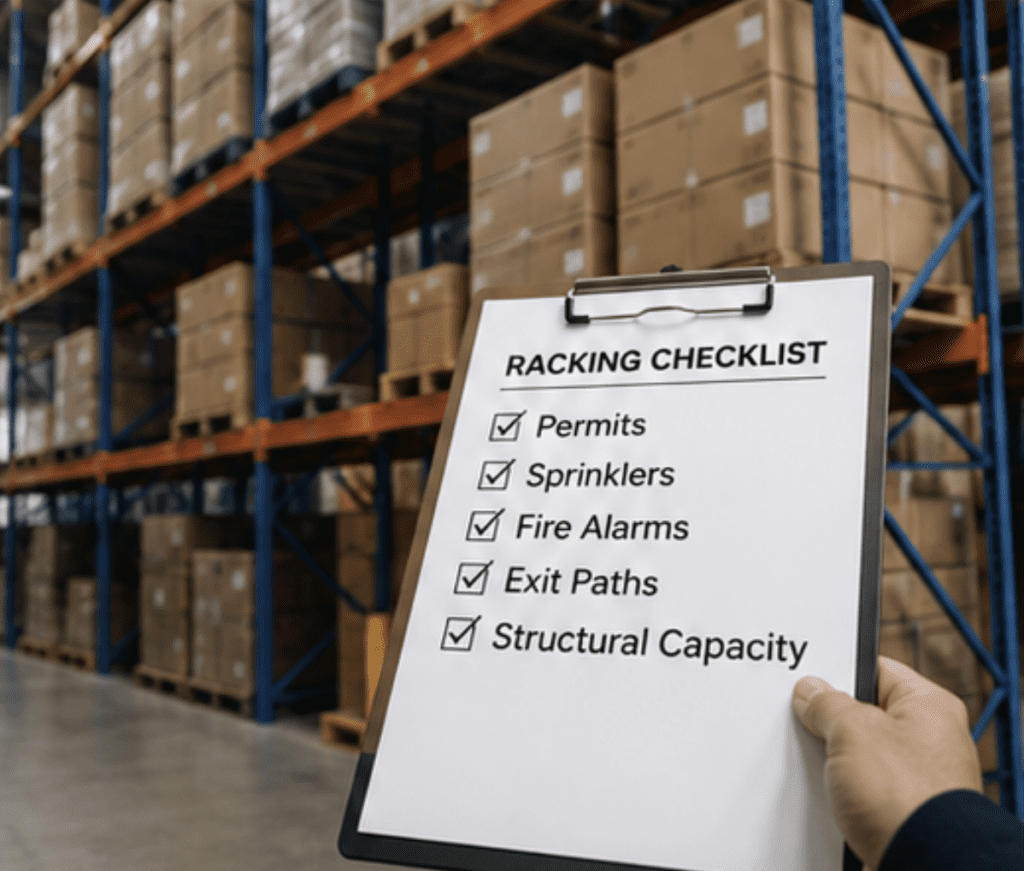
Modern racking systems directly impact:
- Fire protection systems
- Sprinkler calculations
- Emergency exit pathways
- Forklift aisle spacing
- Structural load capacities
- Storage heights and commodity classifications
Ignoring these requirements can result in failed inspections, costly retrofits, delayed occupancy, fines, penalties, and even operational shutdowns, not to mention expenses that can easily climb into the hundreds of thousands of dollars.
There is also a significant insurance exposure that many businesses fail to consider. If a fire, rack collapse, or workplace accident occurs and investigators determine the racking system was installed without proper permits or approvals, insurers may argue negligence or code noncompliance. This can jeopardize insurance coverage and expose both tenants and property owners to substantial financial liability and business interruption losses.
What Tenants and Brokers Should Do Before Signing
1. Develop Preliminary Rack Layouts Early
Prepare conceptual rack layouts before signing the lease, including rack heights, aisle widths, storage density, forklift paths, and exit routes.
2. Share Rack Plans with the Landlord
Provide layouts early so the building can be evaluated for sprinkler, lighting, fire alarm, structural, and life safety impacts.
3. Clearly Define Responsibility
The lease should clearly address responsibility for:
- Permit costs
- Engineering and architectural plans
- Sprinkler and fire protection upgrades
- Lighting modifications
- Inspections and compliance-related delays
4. Protect Free Rent Periods
Free rent timelines should account for the realistic time required for permitting, fire marshal approvals, and racking installation.
A Collaborative Approach Benefits Everyone
The most successful warehouse projects occur when landlords, tenants, brokers, engineers, and racking providers coordinate early in the process.
Planning ahead helps:
- Reduce disputes
- Avoid project delays
- Minimize unexpected costs
- Accelerate occupancy
- Improve long-term operational efficiency
How Alpine Systems Associates Inc. Can Help
Alpine Systems Associates Inc. works with warehouse operators, landlords, and commercial real estate professionals to create compliant and scalable warehouse racking solutions.
Our team helps clients:
- Develop preliminary rack layouts
- Identify compliance risks early
- Coordinate permitting requirements
- Support fire protection and life safety planning
- Reduce costly delays and unexpected expenses
Addressing these issues before signing the lease can save substantial time, money, and operational disruption while creating safer and more efficient warehouse operations.
If you’re looking to improve warehouse safety or need expert guidance on your racking systems, contact Alpine today. We’re here to help you protect your operation from the ground up.
Regards,
Fred Nieves